How a lamp is built layer by layer
Eachlayerisonlyslightlythickerthanahumanhair.
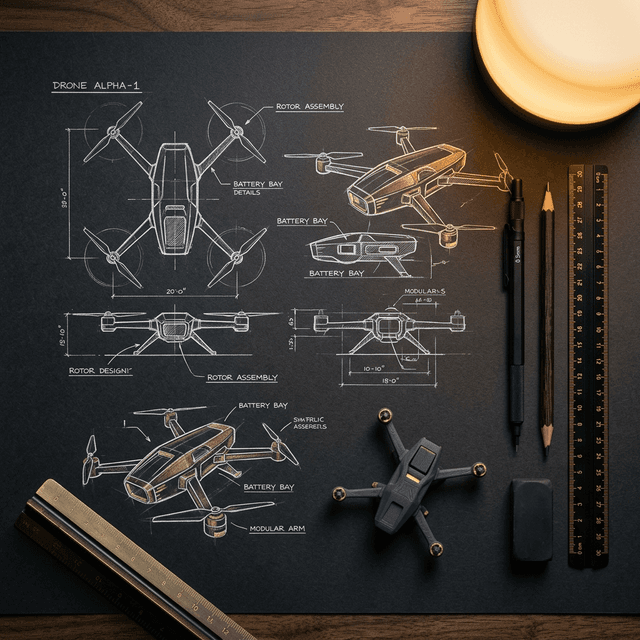
It begins with a sketch
Our signature desk lamp starts as a sketch — rough lines on a tablet, capturing the curve of light and shadow we want to achieve. The first version never survives contact with physics.
The design moves into CAD software where we model every millimetre. Wall thickness, structural integrity, light diffusion angles — each parameter affects the final product. We typically go through 8 to 12 iterations before a design is print-ready.
3,200 layers of precision
Slicing is where the magic happens. The 3D model is divided into thousands of horizontal layers — our desk lamp needs approximately 3,200 layers at 0.12mm height. The slicer generates a path for the print head that will take 14 hours to complete.
Each layer is only slightly thicker than a human hair.
The print runs overnight. Temperature stability is crucial — a 2-degree fluctuation can cause layer separation. We monitor remotely, watching the time-lapse build up layer by layer, each one only slightly thicker than a human hair.
The art of finishing
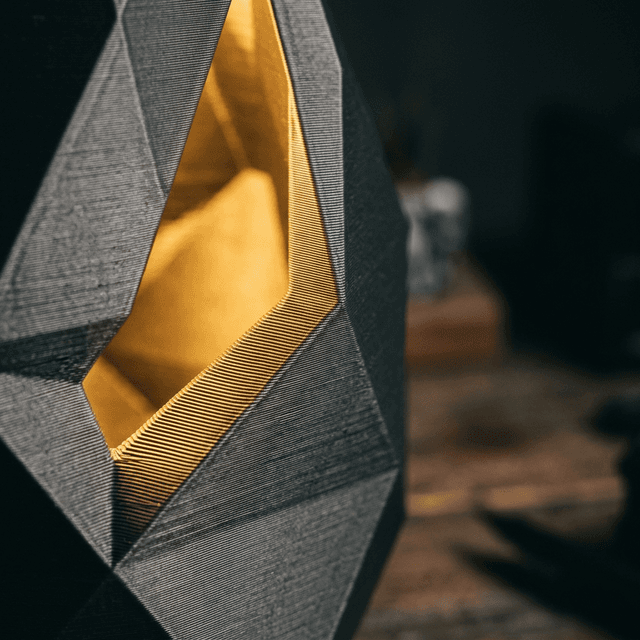
Post-processing takes almost as long as the print itself. Removing support structures, sanding contact points, testing the electrical components, and applying the final finish. Every lamp is inspected under magnification before it earns the Layerd mark.
The result is an object that couldn't exist without 3D printing — geometries that are impossible to mould, surfaces that play with light in ways that feel organic despite being mathematically precise. That's the beauty of building layer by layer.